|
Welcome back to GIGABAT's Newsletter!
The GIGABAT project has reached several key milestones in recent months, showcasing progress across various work areas and strengthening collaboration among partners.
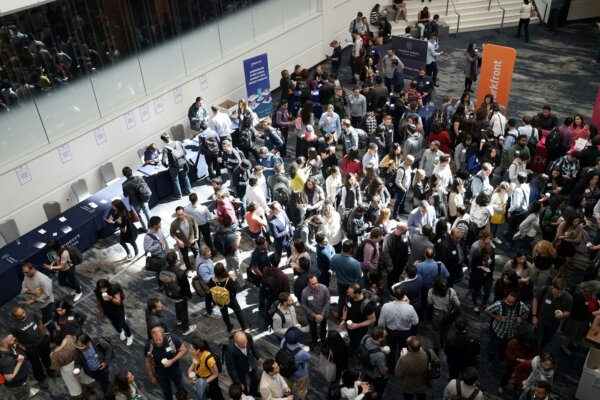
The M18 General Assembly has just taken place in Grenoble, hosted by Verkor, marking the important milestone of 18 months of work.
The consortium is tackling critical bottlenecks in battery production by driving significant advancements in process optimization across multiple stages of manufacturing, while also developing innovative machinery systems that are poised to reshape the future of Gigascale lithium-ion battery production.
On the mixing optimization task, the Institute for Particle Technology (iPAT) at TU Braunschweig investigated optimization of the grinding media density, size, loading volume and other process parameters for continuous mixing of graphite-based anode slurries and will extend their study now to silicon-graphite anode slurries. In parallel, RISE has been studying the effect of the mixing efficiency when incorporating homogenizer into several mixing systems at lab and pilot scale, and CIDETEC Energy Storage will extend now this study along 2025 at their production pilot plant. Matthews International has been working on the implementation & adaptation of the two thickness-measurements in the calender they are developing in the project and are currently calibrating the surface control system to finally send this calender to CIDETEC during first half of 2025. Verkor is giving inputs to the partners bringing his cell-maker experience to the project.
The Institute for Particle Technology (iPAT) at TU Braunschweig and CIDETEC Energy Storage have been studying lab-scale drying of cathode and anode electrodes by combining infrared (IR) radiation and convective drying techniques. These studies are incorporating IR emitters with varied wavelengths, reflectors, and power, supplied by Excelitas Noblelight.
These experiments not only demonstrated advancements in lab-scale processes but also laid the foundation for designing a roll-to-roll (R2R) post-drying machine. This larger-scale system, currently being developed with the help of PowerCo SE and Jagenberg Converting Solutions, aims to integrate IR and convective drying for more efficient production. The design and simulation work for the R2R system began in late 2024 and is expected to be completed in 2025.
Besides, iPAT and Zeppelin have collaboratively characterized bulk powder raw materials used in battery manufacturing for transportation, storage, dosing, and handling. Ferroglobe contributed anode-grade silicon particles with various coatings, aiding the investigations. iPAT also evaluated three lab-scale methods for direct recycling of electrode production scrap provided by PowerCo, assessing material recovery yield, efficiency, and recycled product purity for battery reuse. The scaling up of the selected recycling method will take place along 2025.
Manz has developed an innovative stacking system that can process up to 400 electrodes or mono-cells per minute, significantly improving efficiency in the cell assembly process. COMAU is tackling another big challenge in Gigafactory plants, which is cell-formation. They are developing a new formation station to save space and energy with respect to previous technologies, in synergy with CIDETEC Energy Storage who is in charge of developing cell simulation models. Verkor is contributing to these developments with its expertise in cell manufacturing.
RISE organized a workshop focused on implementing a life cycle perspective into the project, with the goal of identifying ways to improve the environmental performance of LFP and NMC811 batteries. Ideas generated during this session were included in a comprehensive life cycle assessment (LCA) report, which has since been accepted. Another report, detailing raw material sourcing and major global suppliers within European value chain, was also submitted.
RISE has been instrumental in advancing sustainability goals for the project. A framework for absolute sustainability in battery gigafactories is under development, and early findings have been shared at two major conferences: the SETAC LCA conference in Gothenburg and the International Battery Production Conference in Braunschweig. Additionally, a Battery Heroes Sustainability Working Group has been established, creating a platform for partners to share insights and tackle key environmental challenges.
Together, these efforts demonstrate GIGABAT’s commitment to advancing battery technology through innovation, collaboration, and a focus on sustainability. The project is well-positioned to achieve its goals and set new standards for the industry.
Stay updated about GIGABAT through the website and social media. |