
From progress review to future vision: GIGABAT looks ahead
GIGABAT’s General Assembly and workshop bring industry, research and policy perspectives together in the project’s final year
GIGABAT held its 31-Month Progress General Assembly on 28–29 January 2026 in Donostia / San Sebastián, hosted by CIDETEC Energy Storage. The meeting marked the official entry into the final year of the project and brought together consortium partners, regional stakeholders and external experts to review progress and discuss the future of battery gigafactories in Europe.
The first day of the General Assembly was dedicated to an in-depth review of the technical and strategic progress achieved so far. Across a full day of work package sessions, partners presented the latest results, challenges and next steps covering the entire battery manufacturing value chain. Discussions ranged from advanced machinery for electrode production and post-drying and moisture management, to cell assembly and formation, bulk material handling and direct recycling strategies, and data-driven process optimisation. Environmental sustainability and life cycle assessment, as well as dissemination and exploitation activities, highlighted how technical innovation is being aligned with environmental and market impact.
What clearly emerged from these exchanges is that the project is now moving from development and validation into a more integrated phase, where digitalisation, sustainability and industrial scalability are being tackled together. Several partners underlined how bottlenecks identified earlier in the project are now better understood, enabling more targeted solutions in the final project phase.
The day concluded with a visit to CIDETEC Energy Storage’s facilities. Seeing the laboratories and pilot-scale infrastructures firsthand helped anchor the technical discussions in a real industrial context, and sparked further informal exchanges around equipment layout, data integration and future scale-up scenarios.
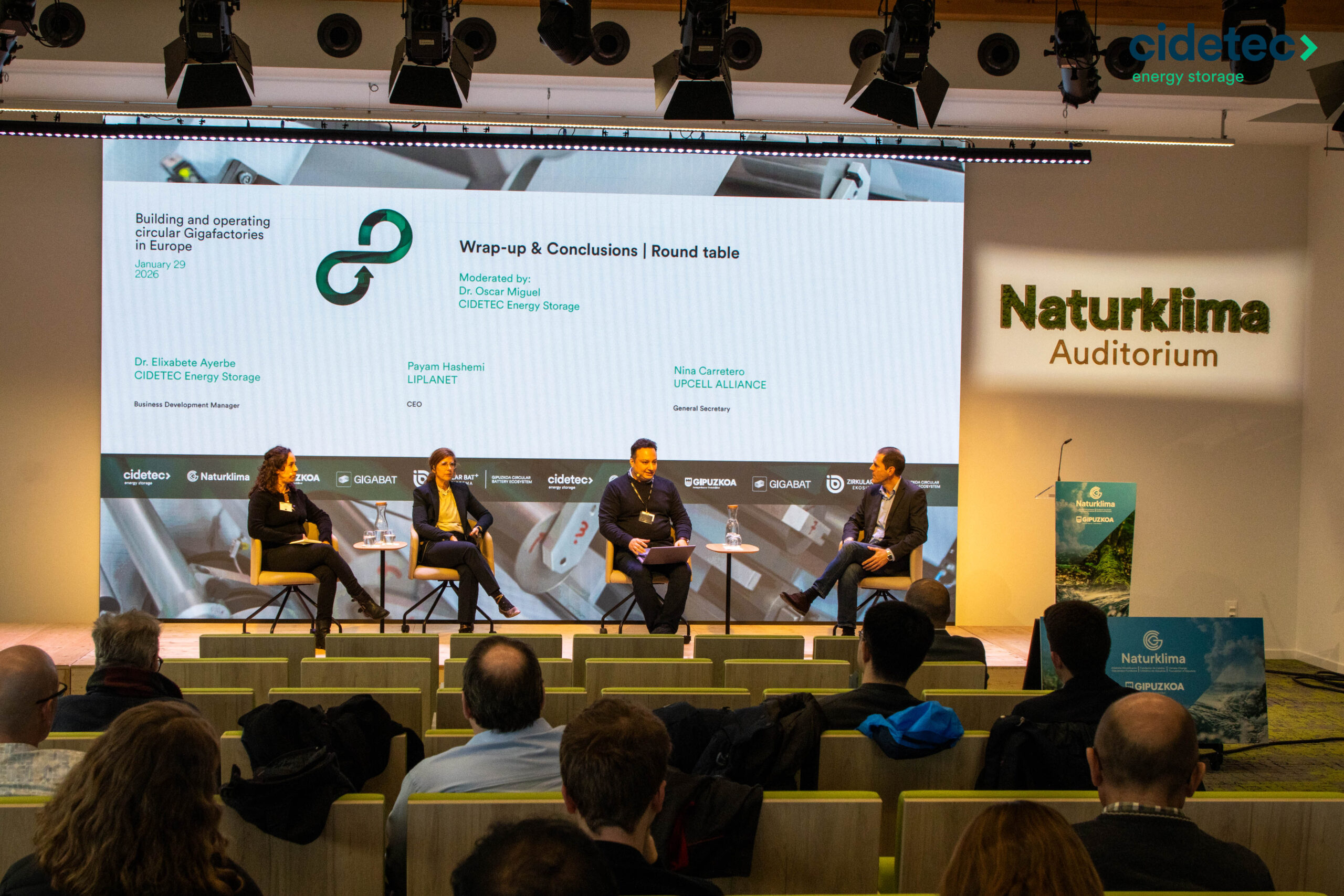
The second day shifted the focus outward, with a public workshop titled “Building and operating circular Gigafactories in Europe”, which brought together external speakers from across the battery value chain, offering perspectives that complemented the project’s internal work.
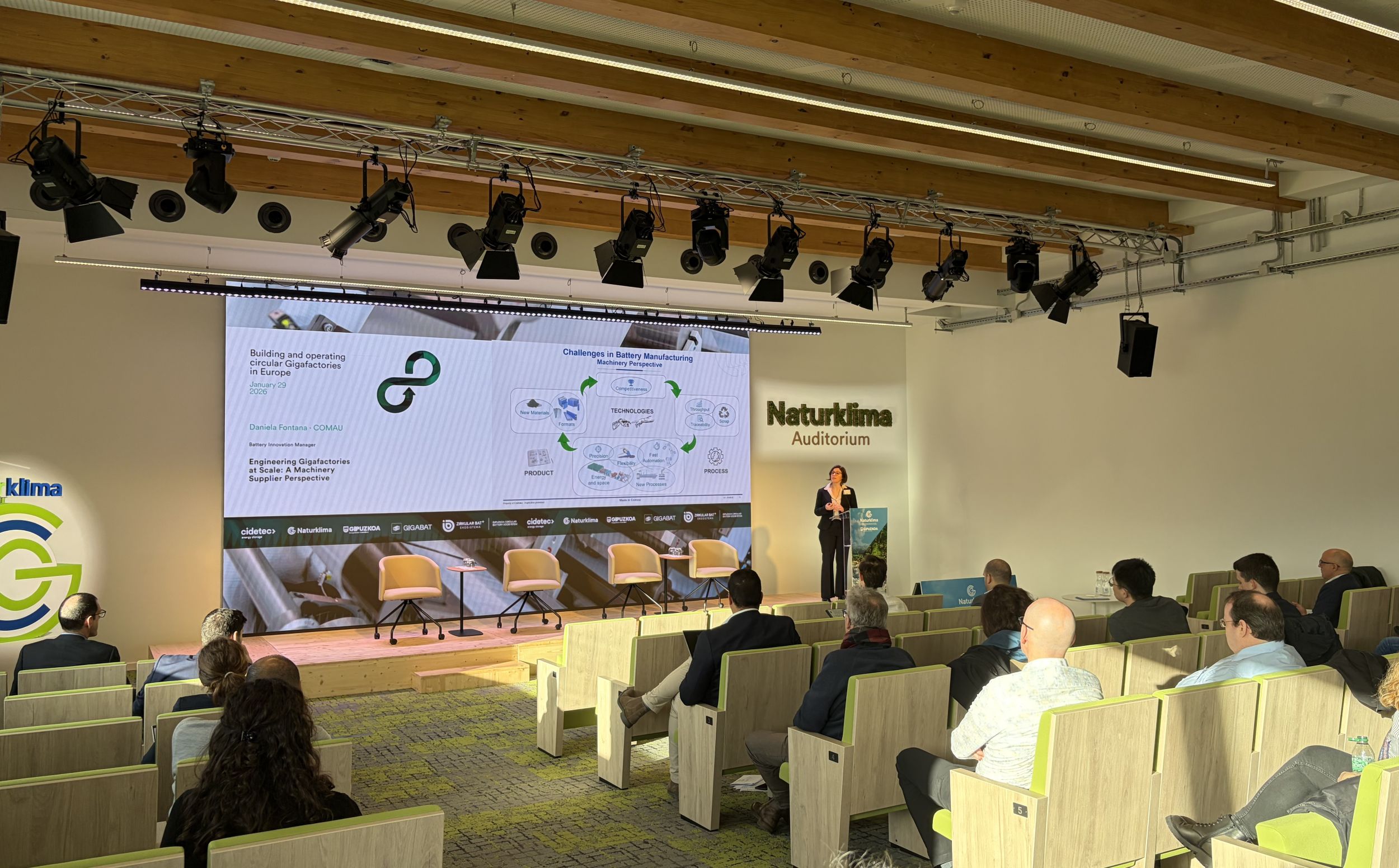
Keynote presentations addressed sustainability-driven battery strategies (VERKOR), the role of virtual twins and digital ambition in gigafactory scale-up (Dassault Systèmes), and machinery suppliers’ views on engineering gigafactories at scale (COMAU). These talks repeatedly highlighted the need to combine robust industrial design with flexible, data-driven tools to cope with fast-evolving technologies and markets.
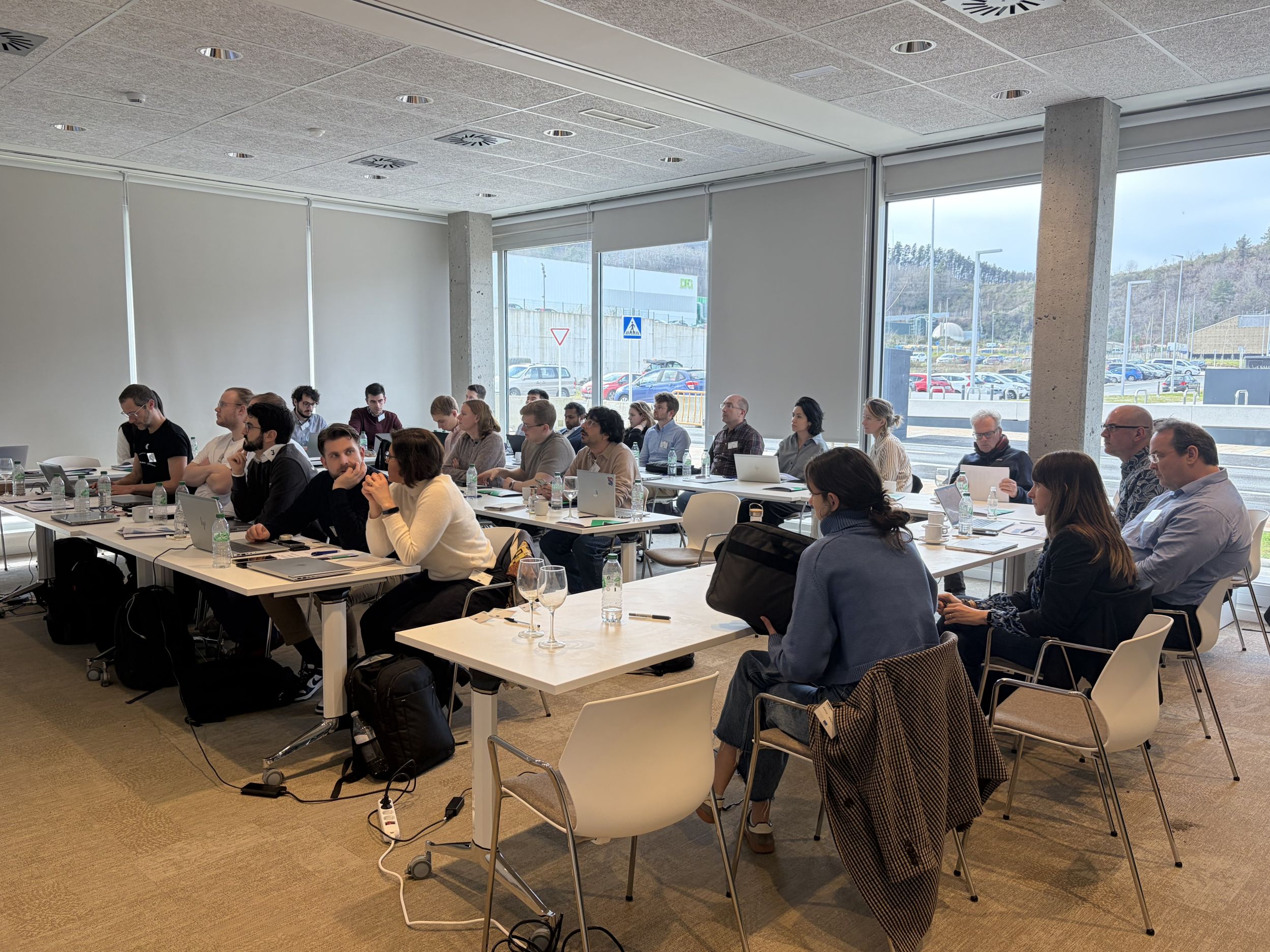
The working sessions that followed were particularly interactive. Discussions on accelerating sustainability through digital technologies, overcoming operational challenges from pilot to plant, and integrating recycling into gigafactory value chains reflected many of the issues GIGABAT itself is addressing. Notes from these sessions pointed to a strong consensus on the importance of early integration of recycling, closer collaboration between equipment suppliers and cell manufacturers, and the use of digital tools not only for optimisation, but also for risk reduction during scale-up.
In the afternoon, broader ecosystem perspectives were provided by contributions from McKinsey on the European battery landscape and from BEPA on the concept of a “Battery Deal for Europe”. The closing round table tied these insights back to the project, reinforcing the relevance of GIGABAT’s approach in the current European context.
The General Assembly and workshop confirmed that GIGABAT is entering its final year with a solid technical foundation, a clearer vision for integration and scale-up, and strong alignment with broader European efforts to build a sustainable, circular and competitive battery manufacturing ecosystem.